Working the chest with dumbbells is simple, effective, and adaptable to most gyms or home setups. This guide explains why dumbbell training works, which exercises to include, and how to build routines for different levels.
Dumbbell Chest Workout Benefits
Dumbbells allow a wider range of motion than a barbell, which can improve muscle activation in the chest. They also demand more stabilization from the shoulders and core, which helps correct strength imbalances.
Using dumbbells can reduce joint stress for some lifters and makes unilateral training easy. That means you can address left-right strength differences through focused work.
How to Build a Dumbbell Chest Workout
Build a balanced session with pressing, pressing variations, and isolation work. Select 3–5 exercises depending on your time and goals.
- Start with a compound press (flat or incline) for 3–5 sets.
- Add a secondary press or unilateral movement for 3 sets.
- Finish with an isolation move, like flyes, for 2–4 sets.
Adjust load, sets, and reps based on whether you aim for strength (4–6 reps), hypertrophy (8–15 reps), or endurance (15+ reps).
Exercise List for a Dumbbell Chest Workout
Include these core movements to hit the chest from multiple angles. Perform each with controlled tempo and full, but comfortable, range of motion.
- Flat Dumbbell Press — Primary mass builder. Keep elbows slightly tucked and press vertically.
- Incline Dumbbell Press — Targets upper chest. Use a 30–45 degree bench angle.
- Dumbbell Fly — Chest isolation. Move from a slight bend in the elbow and focus on stretch and squeeze.
- Single-Arm Dumbbell Press — Unilateral strength and core stability. Helps fix imbalances.
- Dumbbell Pullover — Stretches chest and works upper ribcage and lats when done correctly.
- Floor Press with Dumbbells — Limits range for shoulder-friendly pressing and overload lockout strength.
- Push-Up (weighted or bodyweight) — Great finisher to increase time under tension and endurance.
Sample Dumbbell Chest Workout Routine
Here are three practical templates you can use at home or in the gym. Rest 60–90 seconds between sets unless noted.
Beginner (2× per week)
- Flat Dumbbell Press — 3 sets of 8–12 reps
- Incline Dumbbell Press — 2 sets of 8–12 reps
- Dumbbell Fly — 2 sets of 10–15 reps
Intermediate (2–3× per week)
- Incline Dumbbell Press — 4 sets of 6–10 reps
- Flat Dumbbell Press — 3 sets of 8–12 reps
- Single-Arm Dumbbell Press — 3 sets of 8–10 reps each arm
- Dumbbell Fly — 2–3 sets of 10–15 reps
Advanced (3× per week or as part of split)
- Heavy Flat Dumbbell Press — 5 sets of 4–6 reps
- Incline Dumbbell Press (moderate) — 4 sets of 8–10 reps
- Dumbbell Pullover — 3 sets of 10–12 reps
- Plyometric or Weighted Push-Ups — 3 sets of 6–10 reps
Form and Safety Tips for Dumbbell Chest Workout
Prioritize shoulder health and control. Use a spotter or choose floor presses when training near failure without a partner.
- Warm up the shoulders and thoracic spine before heavy presses.
- Keep a neutral wrist and avoid collapsing the shoulders at the bottom of presses.
- Breathe out on the concentric (press) and inhale on the eccentric (lowering) phase.
- Progress load gradually and track sets and reps to avoid sudden jumps in weight.
Dumbbell single-arm presses can reveal strength imbalances: most people discover a weaker side within the first two sets. Addressing that side first can improve overall symmetry and strength.
Small Real-World Case Study: 8-Week Dumbbell Chest Progress
Mark, a 34-year-old office worker, trained chest twice weekly with mainly dumbbells. He started with 20–30 kg total load on flat presses and followed the intermediate routine above.
After 8 weeks, he reported a 12% increase in his one-rep estimated press and noticeable muscle fullness in the upper chest. Improvements came from consistent progressive overload and adding unilateral work to correct a 10% left-right imbalance.
Quick Equipment and Space Checklist for a Dumbbell Chest Workout
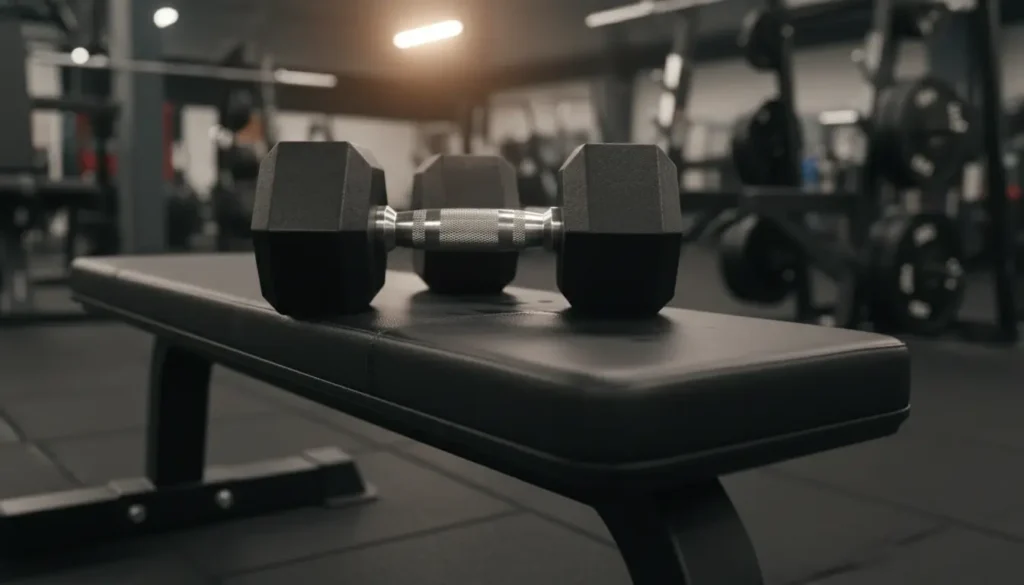
- Adjustable bench (flat to 45 degrees) or stable incline setup.
- Set of dumbbells with progressive loading (or adjustable dumbbells).
- Enough floor space for push-ups and dumbbell pullover movement.
- Optional: resistance bands for warm-up and extra tension on flyes.
By mixing compound presses, unilateral work, and isolation exercises you can build a complete dumbbell chest workout that fits any schedule. Track progress, respect recovery, and prioritize clean technique to see steady gains.