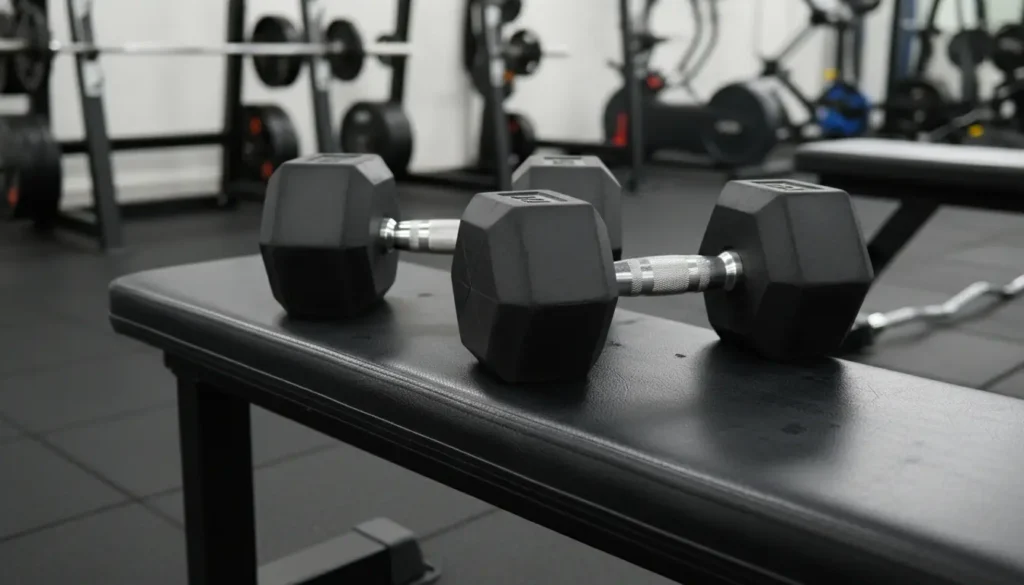
Dumbbell For Arms Workout: Why It Works
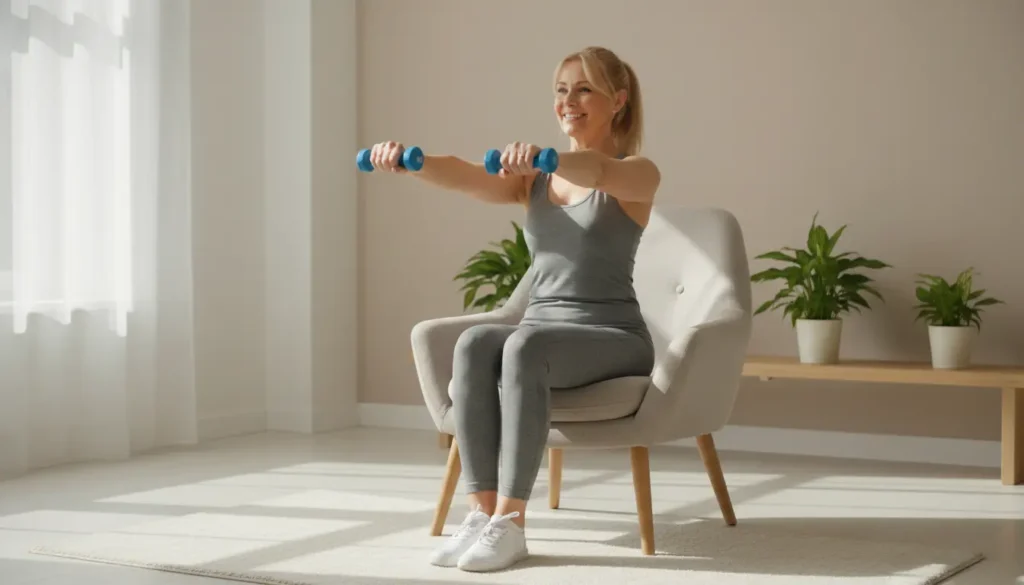
Using a dumbbell for arms workout gives direct, controlled resistance for both the biceps and triceps. Free weights let muscles work through natural ranges of motion and demand stabilizer muscles, improving balance and joint health.
Compared with machines, dumbbells allow unilateral training, which corrects imbalances and improves symmetry. That makes them useful whether you train at home or in a commercial gym.
Benefits Of A Dumbbell For Arms Workout
A dumbbell for arms workout targets both prime movers and supporting muscles with simple equipment. This approach improves strength, muscle tone, and functional carrying or pushing ability.
Benefits include better joint stability, easier progression options, and versatility for high-rep endurance or heavy strength work. All of these help people of different fitness levels see measurable gains.
Essential Equipment And Setup For A Dumbbell For Arms Workout
You only need a pair of adjustable or fixed dumbbells and a flat bench or chair to perform most effective exercises. Set the area with enough space to move and keep the floor non-slip to avoid accidents.
Choose weights that allow you to complete sets with good form while still challenging the last two repetitions. Proper posture, controlled tempo, and a focused mind-muscle connection are key to progress.
How To Choose Dumbbell For Arms Workout Weight
Select a weight you can lift for 8 to 12 controlled reps for hypertrophy or 5 to 8 reps for strength, while keeping the last reps challenging. If form breaks down before the rep range ends, drop the weight by one increment and try again.
For beginners, start light and increase by 2.5 to 5 pounds per hand every 1–2 weeks based on how the last sets feel. Track weights, reps, and perceived exertion to guide steady progression.
Key Exercises For A Dumbbell For Arms Workout
Below are core moves that should appear in most dumbbell for arms workout plans because they target the major arm muscles efficiently. Perform each exercise with slow, controlled reps and full range of motion for best results.
Biceps Dumbbell Curl
Stand or sit with a dumbbell in each hand, palms facing forward, and elbows close to your sides. Curl the weights up while keeping elbows still, then lower slowly to full extension.
Use a weight that allows a controlled 8–12 reps and avoid swinging the torso to ensure the biceps do the work.
Hammer Curl (Neutral Grip)
Hold dumbbells with palms facing each other and curl without rotating the wrist; this emphasizes the brachialis and forearm. Hammer curls add thickness to the arm and assist functional pulling strength.
Perform 8–12 reps with deliberate tempo, pausing briefly at the top for added tension.
Concentration Curl
Sit on a bench, rest your elbow on the inner thigh, and curl one dumbbell at a time for strict isolation of the biceps peak. This exercise reduces momentum and forces deep muscle recruitment.
Keep reps slow and controlled, aiming for 10–15 reps per arm depending on your goals.
Triceps Dumbbell Kickback
Hinge at the hips with a flat back, upper arm parallel to the floor, and extend the forearm back until straight. Triceps kickbacks are great for high-rep isolation and finishing a triceps set.
Use lighter weights and 12–15 reps to maintain form and full contraction at the top of each rep.
Overhead Dumbbell Triceps Extension
Hold one or two dumbbells overhead with arms extended and lower behind the head by bending at the elbows. This movement targets the long head of the triceps and improves overhead pressing stability.
Maintain an upright torso and avoid arching the lower back; perform 8–12 controlled reps for hypertrophy.
Sample Dumbbell For Arms Workout Routines
Here are three simple routines you can follow depending on experience level and time available. Each routine focuses on balanced development of biceps and triceps using mostly dumbbells.
- Beginner (2x weekly): 3 sets each of dumbbell curls and overhead triceps extensions, 10–12 reps per set. Rest 60–90 seconds between sets.
- Intermediate (2–3x weekly): 3 sets each of hammer curls, concentration curls, triceps kickbacks, and skull crushers, 8–12 reps. Rest 45–75 seconds.
- Advanced (3x weekly): Superset biceps curl with triceps extension for 4 rounds, 6–10 reps heavy. Add drop sets or tempo variations for volume.
Progressions And Safety Tips For Dumbbell For Arms Workout
Progress by increasing weight, adding a set, or improving tempo control rather than rushing to heavier loads. Prioritize full range of motion and slow eccentric phases to maximize muscle damage and growth.
Always warm up the shoulders and elbows with light sets and mobility work to reduce injury risk. If pain arises in the joint rather than the muscle, stop and assess technique or load.
Using unilateral dumbbell exercises can reveal and correct strength imbalances between arms, leading to more symmetrical muscle development. Balanced arms reduce injury risk and improve single-arm performance in sports and daily tasks.
Short Case Study: Practical Results
Case study: Mark, a 35-year-old office worker, added a focused dumbbell for arms workout twice weekly for 12 weeks while maintaining his cardio routine. He progressed from 15-pound to 25-pound dumbbells on curls and reported better grip strength and visible arm definition.
Tracking weight and reps weekly helped Mark increase intensity safely, and alternating heavy and high-rep sessions prevented overuse. His experience shows that simple, consistent dumbbell work produces measurable strength and aesthetic changes.
Final Notes On A Dumbbell For Arms Workout
A dumbbell for arms workout is simple, adaptable, and effective for building arm strength and size with minimal equipment. Follow progressive overload, prioritize form, and allow 48 hours of recovery between intense arm sessions for optimal results.
Use the routines and exercises here as a template, adjust based on your schedule and recovery, and track progress to stay consistent and motivated.