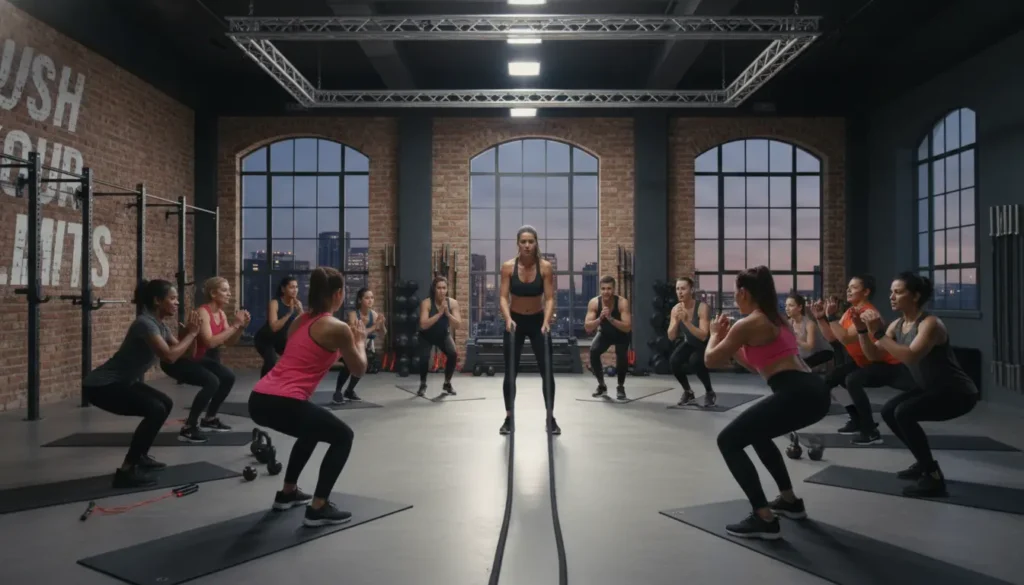
The Le Sserafim workout trend emphasizes lean muscle, posture, and stage-ready endurance. This guide breaks down a practical routine you can follow at home or in the gym. Focus on consistency, progressive overload, and recovery to see steady improvements.
What the Le Sserafim Workout Focuses On
The core elements are full-body strength, lower-body power, core stability, and cardio for stamina. Workouts use compound moves, mobility work, and short bursts of higher-intensity cardio.
This mix helps develop lean muscle and better posture—qualities visible on stage and useful for everyday fitness.
Weekly Plan Based on the Le Sserafim Workout Style
Below is a balanced weekly plan intended for intermediate beginners. Adjust volume and weights to your fitness level.
- Day 1: Strength — Lower Body Focus
- Day 2: Cardio + Core
- Day 3: Strength — Upper Body Focus
- Day 4: Active Recovery + Mobility
- Day 5: Full-Body Circuit
- Day 6: HIIT or Dance Cardio (stage stamina)
- Day 7: Rest
Day 1: Strength — Lower Body
Focus on compound lifts for the glutes, hamstrings, and quads. Aim for 3 sets of 8–12 reps.
- Back squats or goblet squats
- Romanian deadlifts
- Walking lunges
- Calf raises
Day 2: Cardio + Core
Keep cardio moderate for 20–30 minutes, then add core circuits. Perform 3 rounds of the following.
- Plank 45 seconds
- Bicycle crunches 20 reps
- Hanging leg raises or lying leg raises 12 reps
Le Sserafim Workout: Full-Body Circuit Example
Circuits build muscular endurance and closely match the demands of choreographed performance. Do 3–4 rounds with 60–90 seconds rest between rounds.
- Push-ups — 12 reps
- Bodyweight squats or jump squats — 15 reps
- Dumbbell rows — 10 reps per side
- Glute bridges — 15 reps
- Mountain climbers — 30 seconds
Progression Tips for the Le Sserafim Workout
To progress, increase load, reps, or rounds every 2–4 weeks. Track weights, rest times, and perceived exertion to measure improvement.
- Increase weight by 5–10% when sets feel manageable.
- Add one extra round to circuits when recovery is quick.
- Shorten rest intervals to improve conditioning.
Mobility and Recovery
Mobility work prevents injury and supports performance. Spend 10–15 minutes after workouts on targeted stretches and mobility drills.
- Hip flexor and hamstring stretches
- Thoracic rotations and shoulder dislocations
- Foam rolling for quads and glutes
The combination of low-load strength and dance or HIIT-style cardio improves both muscle tone and aerobic capacity more effectively than cardio alone.
Sample Warm-Up and Cool-Down
Warm-ups prime the body and lower injury risk. A quick 8-minute routine is effective before any Le Sserafim-style session.
- 3 minutes light cardio (jump rope or brisk walk)
- Dynamic leg swings and arm circles — 2 minutes
- Bodyweight squats and lunges — 3 minutes
Finish with 5–8 minutes of static stretching focused on muscles used that day.
Nutrition and Recovery Notes
Support your training with balanced meals: lean protein, complex carbs, healthy fats, and vegetables. Hydration is essential, especially on cardio or dance days.
Aim for 7–8 hours of sleep to optimize recovery and performance. Consider a post-workout snack that contains protein and carbohydrates within 60 minutes of training.
Real-World Example: 8-Week Case Study
Client: 26-year-old amateur dancer. Goal: Improve stage stamina and leg tone for weekly performances. Baseline: could run 1.5 miles in 14 minutes and perform 20 continuous squats.
Program: Followed the weekly plan above, training 5 days per week and reducing alcohol intake. Weights increased gradually and HIIT was added on week 4.
Results after 8 weeks: improved 1.5-mile time to 12:40, increased squat endurance to 40 continuous bodyweight squats, and reported feeling more confident during choreography. Small changes were sustained by keeping workouts varied and measurable.
Practical Tips for Consistency
- Schedule workouts like appointments to build a routine.
- Track progress with a simple workout log or app.
- Pair training with activities you enjoy, such as dance or group classes, to stay motivated.
Safety and Modifications
If you have prior injuries, consult a medical professional before starting. Modify high-impact moves to low-impact versions when needed.
- Knee pain: replace jump squats with static squats and increase reps.
- Shoulder discomfort: reduce range on overhead moves and focus on rows for upper-back strength.
Following a Le Sserafim workout-style plan gives a balanced blend of strength, conditioning, and mobility. With sensible progression and recovery, you can build the lean, stage-ready fitness this approach emphasizes.