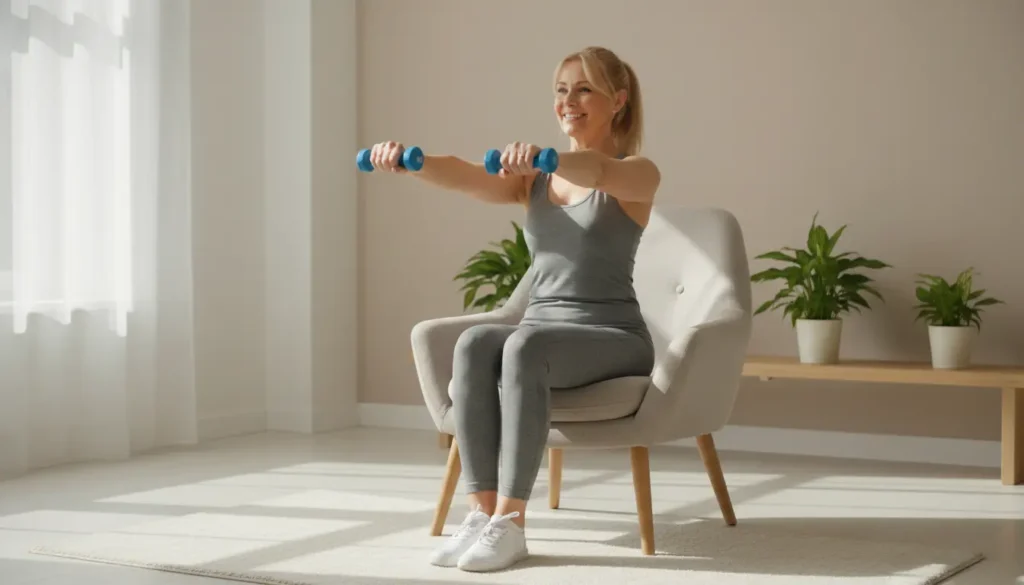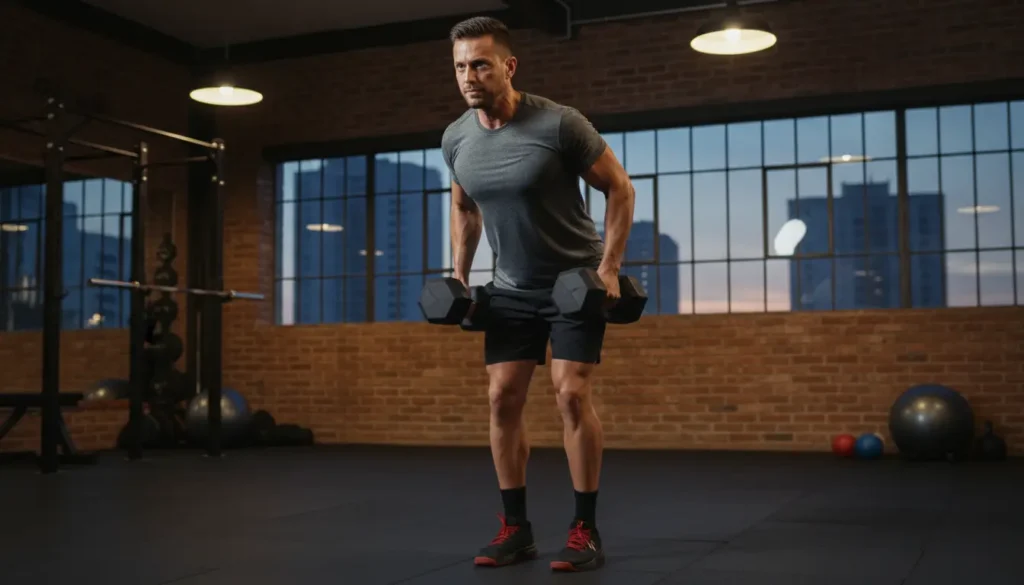
Using dumbbells for back training gives a lot of variety and allows safe unilateral work. This article shows practical exercises, a sample routine, warm-up tips, and progression ideas you can use at home or in the gym.
Benefits of a Back Workout With Dumbbells
Dumbbells allow independent movement of each side, which reduces imbalances and improves coordination. They are also easier on joints than some machines and let you change grips and angles quickly.
With a few pairs of dumbbells you can train every major back muscle, including the lats, rhomboids, traps, and erector spinae.
Muscle groups targeted by a back workout with dumbbells
- Latissimus dorsi (lats) — width and pulling power.
- Rhomboids and middle traps — scapular retraction and posture.
- Lower traps and rear delts — shoulder stability.
- Erector spinae — spinal support and posture.
How to Structure a Back Workout With Dumbbells
A typical session includes a warm-up, 3–5 main exercises, and a short finisher. Choose 3–4 exercises that cover horizontal pulls, vertical pulls, and posterior chain work.
Aim for 2–4 sets per exercise and 6–15 reps depending on your goal. Lower reps and heavier weight for strength, higher reps for muscle endurance and size.
Warm-up for a back workout with dumbbells
Begin with 5–8 minutes of light cardio to raise core temperature. Follow with mobility and activation drills for the shoulders and thoracic spine.
- Band pull-aparts — 2 sets of 15.
- Scapular push-ups — 2 sets of 8–10.
- Light single-arm rows — 1–2 sets of 12 each side.
Sample Back Workout With Dumbbells
This balanced routine covers the main movement patterns. Adjust weights so the last 1–2 reps are challenging but controlled.
-
Dumbbell Bent-Over Row — 3 sets of 6–10 reps
Hinge at the hips with a neutral spine. Pull dumbbells toward your hips, squeeze shoulder blades, then lower slowly. Common mistake: rounding the lower back.
-
Single-Arm Dumbbell Row — 3 sets of 8–12 reps per side
Place one knee on a bench or use a staggered stance. Pull the weight to your lower chest or hip and rotate slightly to engage the lats. Focus on full range of motion.
-
Dumbbell Romanian Deadlift — 3 sets of 8–12 reps
Stand tall, hinge at the hips, and lower dumbbells along the thighs. Keep a soft knee and a long spine to target the posterior chain and lower back stability.
-
Dumbbell Pull-Over — 2–3 sets of 10–15 reps
Lie on a bench or floor, hold one dumbbell with both hands, lower it behind your head, then pull over to chest level. Emphasizes lats and chest stretch.
-
Reverse Fly — 2–3 sets of 12–15 reps
Use light weight and hinge forward. Pause briefly at the top to squeeze rear delts and upper back. Avoid using momentum.
Optional finisher: Farmer’s Walk — 2 rounds of 30–60 seconds to build grip and core stability.
Progression and Programming for a Back Workout With Dumbbells
Progress by increasing weight, adding sets, or increasing controlled tempo. Track your workouts and aim to improve one variable every 1–2 weeks.
Frequency and load guidance
- Beginners: 1–2 back sessions per week with lighter loads and focus on form.
- Intermediate: 2–3 sessions per week with a mix of heavy and moderate sets.
- Advanced: 2–4 sessions with specific emphasis days (e.g., strength vs hypertrophy).
Safety and Form Tips for Back Workout With Dumbbells
- Keep a neutral spine during rows and deadlifts to protect the lower back.
- Breathe: exhale on the concentric (pull) and inhale on the eccentric (lowering).
- Use controlled tempo; avoid jerking or swinging the weights.
- If you have low back pain, reduce range of motion, use lighter loads, and consult a professional.
Training one side at a time with dumbbells can improve muscle symmetry and reduce the strength gap between left and right sides. Studies show unilateral training helps correct imbalances faster than bilateral work alone.
Common Mistakes to Avoid in a Back Workout With Dumbbells
- Using too much weight and sacrificing technique.
- Allowing the shoulders to round forward during rows.
- Neglecting scapular control — retract and depress the shoulder blades during pulls.
Real-World Example: Case Study
Sarah, a 34-year-old teacher, started a twice-weekly back workout with 5–12 kg dumbbells. She focused on single-arm rows and Romanian deadlifts, increasing weight every two weeks.
After 12 weeks she reported less upper-back fatigue at work and measurable strength gains. Her single-arm row improved from 8 kg x 8 reps to 14 kg x 8 reps, and her posture improved on daily follow-up photos.
Quick Workout Template You Can Use
- Warm-up: 8 minutes (cardio + bands).
- Main: Bent-over rows 3×8, Single-arm rows 3×10, RDLs 3×10.
- Accessory: Reverse fly 2×15, Pull-over 2×12.
- Finisher: Farmer’s walk 2×45 seconds.
Consistent, progressive work with attention to form will give the best results. Dumbbells are a flexible and effective tool for building a stronger, more resilient back.