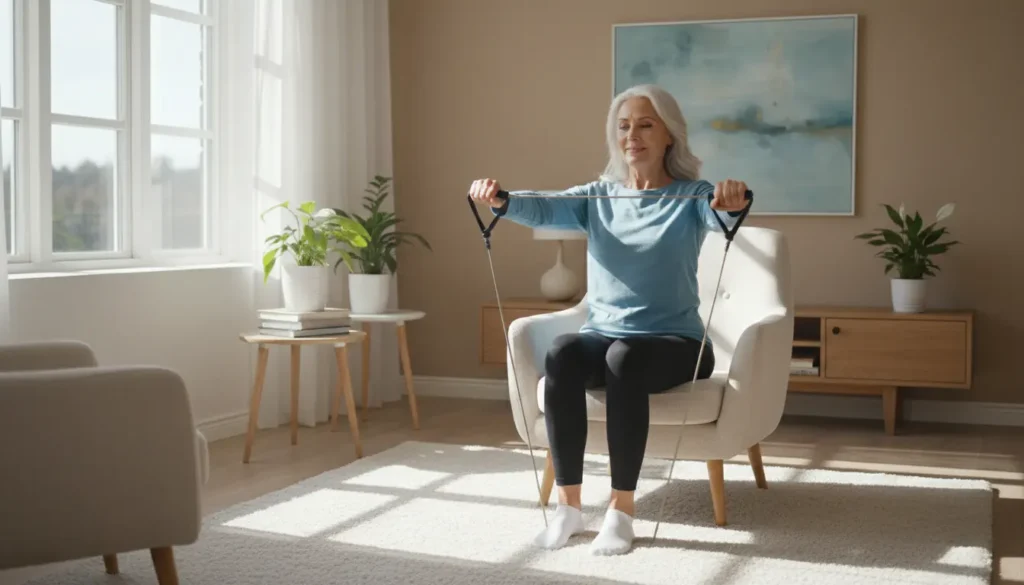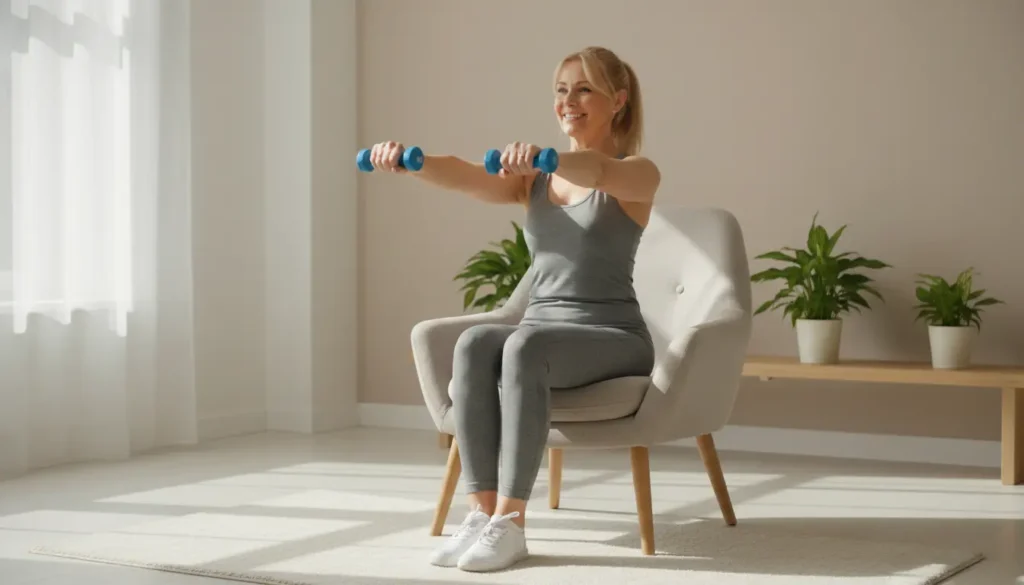
Why chair exercises can help melt stubborn fat and sculpt a narrower waist
Chair exercises are low-impact, accessible, and easy to fit into a daily routine. They raise your heart rate, engage core muscles, and improve posture — all important for reducing midsection fat over time.
For beginners, seated workouts reduce joint stress and remove barriers like lack of equipment or space. Consistency, progressive challenge, and a modest calorie deficit are the practical foundations for visible change.
How chair exercises work to target stubborn fat
You cannot spot-reduce fat with a single exercise, but you can strengthen and tighten the waist muscles while burning calories. This combination helps the waist appear narrower as body fat decreases and muscle tone improves.
Chair routines that mix cardio-like movements, core strengthening, and resistance create a balanced stimulus. Over weeks, this improves metabolic activity and posture, contributing to a slimmer midsection.
Key benefits of seated workouts
- Low-impact and joint friendly for all fitness levels.
- Easy to do at home, at work, or while traveling.
- Combines cardio and strength for effective calorie burn.
- Improves core stability which supports a narrower waistline.
Beginner chair exercises to melt stubborn fat and sculpt a narrower waist
Below is a practical 20-minute routine you can perform 3–6 times per week. Start with a pace you can sustain and increase reps or rounds as you get stronger.
Warm-up (3 minutes)
- Seated Marching: 60 seconds, lift knees alternately.
- Seated Arm Circles: 30 seconds forward, 30 seconds backward.
- Torso Twists: 30 seconds, gentle rotation side to side.
Main routine (12 minutes)
-
Seated Bicycle Crunches — 45 seconds work, 15 seconds rest.
Sit tall, lift one knee and twist opposite elbow toward it, alternate. Keep slow controlled motion to engage obliques.
-
Chair Sit-to-Stand with Knee Lift — 45 seconds work, 15 seconds rest.
Stand up from the chair, then sit back slowly and lift one knee as you stand. This adds cardio and leg strength.
-
Seated Russian Twists — 45 seconds work, 15 seconds rest.
Hold hands together or a light weight, twist from the waist and tap sides of the chair. Keep chest up and core braced.
-
Seated March with Arm Press — 45 seconds work, 15 seconds rest.
March in place while pushing arms overhead or forward. This raises heart rate and engages the upper core and shoulders.
-
Seated Side Bends — 45 seconds work, 15 seconds rest.
Sit upright, lower one hand toward the chair seat while reaching the opposite arm overhead. Alternate sides to target obliques.
Cool-down and stretch (2–3 minutes)
- Seated Forward Fold: 30 seconds, breathe deeply.
- Seated Spinal Twist: 30 seconds each side.
- Deep Breathing: 30 seconds to lower heart rate.
Progressions and modifications
To keep improving, either increase work time, add more rounds, or add light hand weights. If you have limited mobility, reduce each interval to 20–30 seconds and extend rest.
To make exercises harder, slow the eccentric (lowering) phase, add pulses at peak contraction, or perform more rounds. Always prioritize form over speed.
Safety tips for chair workouts
- Use a stable chair without wheels and with a firm seat.
- Keep feet flat on the floor unless an exercise calls for a lift.
- Stop if you feel sharp pain, dizziness, or unusual shortness of breath.
- Consult a healthcare provider before starting if you have chronic conditions.
Short, frequent sessions can be as effective as longer workouts for beginners. Three 20-minute seated sessions per day may burn as many calories as one long session, while improving adherence.
Simple tracking and nutrition tips to accelerate fat loss
Exercise must pair with reasonable nutrition to reduce stubborn fat. Track small changes: a 200–300 calorie reduction per day plus consistent exercise often yields gradual, sustainable loss.
Focus on protein at each meal, whole foods, and hydration. Even small improvements maintained over weeks deliver visible changes around the waist.
Real-world example: A short case study
Case Study: Maria, 52, office worker. Maria started three 20-minute chair sessions per week using the routine above. She improved posture and reduced waist measurement by 2 inches over 12 weeks.
Her progress included adding one extra session after four weeks and choosing leaner protein and veggies at meals. She reports less back pain and increased confidence when sitting and standing.
Quick checklist before you start
- Stable chair with back support
- Clear 3–4 feet of space around the chair
- Water bottle and towel nearby
- Timer or interval app set to 45/15 or your chosen ratio
Conclusion: Practical steps to a narrower waist
Beginner chair exercises are a realistic, low-impact way to build core strength, burn calories, and support gradual fat loss around the waist. Regular practice, sensible nutrition, and small progressions will deliver the best results.
Start with the 20-minute routine, track your consistency, and adjust intensity as you improve. Over weeks, these changes translate to a leaner, stronger midsection.