Why choose shoulder workouts with dumbbells
Dumbbells give a natural range of motion that helps balance strength across both shoulders. They allow unilateral training, reduce muscle imbalances, and are easy to scale as you progress.
This guide covers key exercises, technique, sample workouts, and recovery tips to build stronger, more stable shoulders using only dumbbells.
Benefits of shoulder workouts with dumbbells
- Improved shoulder stability and rotator cuff engagement.
- Greater range of motion compared to machines or barbells.
- Easy to progress with small weight increments.
Essential dumbbell shoulder exercises
Use these fundamental moves to build a complete shoulder routine. Focus on form and controlled reps rather than heavy loads.
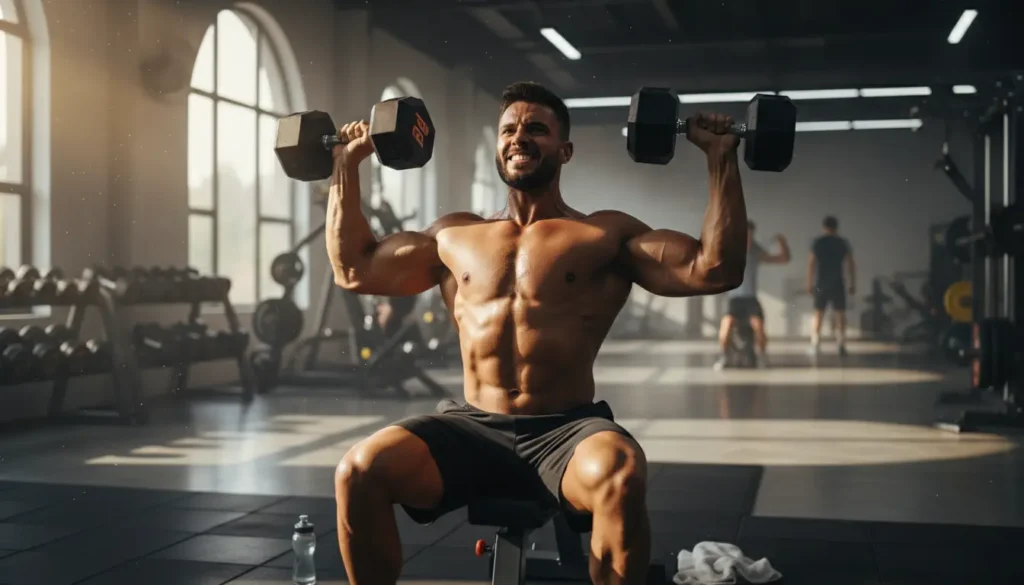
1. Dumbbell Overhead Press
Stand or sit with a neutral spine, press dumbbells overhead until arms are extended. Keep core tight and avoid overarching the lower back.
Suggested sets/reps: 3 sets of 6–12 reps.
2. Dumbbell Lateral Raise
With a slight bend in the elbow, raise dumbbells out to the side to shoulder height. Pause briefly and lower slowly to maximize time under tension.
Suggested sets/reps: 3 sets of 10–15 reps.
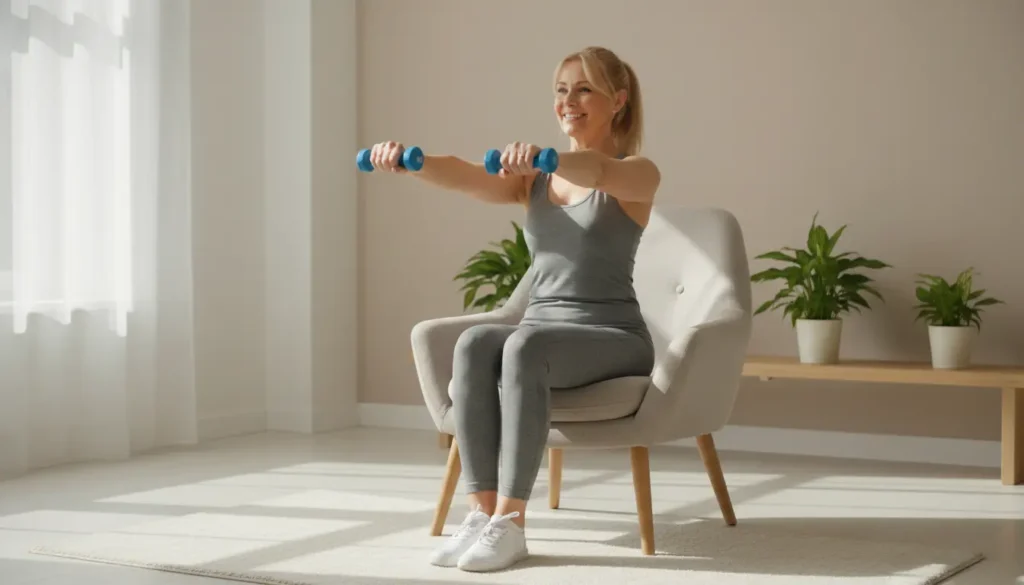
3. Dumbbell Front Raise
Lift one or both dumbbells in front of you to shoulder height. Keep movement controlled and avoid swinging the torso.
Suggested sets/reps: 3 sets of 8–12 reps.
4. Bent-Over Rear Delt Fly
Hinge at the hips with a flat back and raise dumbbells out to the sides to work rear deltoids. Keep elbows slightly bent and squeeze shoulder blades together.
Suggested sets/reps: 3 sets of 10–15 reps.
5. Dumbbell Arnold Press
A variation that rotates the shoulder through internal to external rotation, targeting multiple heads. Rotate palms as you press up for full-range activation.
Suggested sets/reps: 3 sets of 8–12 reps.
Technique tips for shoulder workouts with dumbbells
- Warm up the shoulders with light bands or bodyweight rotations for 5–10 minutes.
- Use a full but controlled range of motion; avoid locking joints aggressively.
- Breathe consistently: exhale on the exertion (press or lift), inhale on the return.
- If pain occurs (sharp or joint-focused), stop and reassess form or reduce load.
Sample shoulder workouts with dumbbells
Choose a routine based on experience. Rest 60–90 seconds between sets for hypertrophy work, and 2 minutes for heavier strength-focused sets.
Beginner: Full-Body Focus (2x per week)
- Dumbbell Overhead Press: 3×8–10
- Dumbbell Lateral Raise: 3×12–15
- Bent-Over Rear Delt Fly: 3×12
Intermediate: Shoulder Emphasis (1–2x per week)
- Dumbbell Overhead Press: 4×6–8
- Arnold Press: 3×8–10
- Dumbbell Front Raise: 3×10–12
- Bent-Over Rear Delt Fly: 3×12–15
Advanced: Strength and Hypertrophy Split
- Strict Dumbbell Press: 5×5 (heavy)
- Superset: Lateral Raise 4×12 + Front Raise 4×12
- Rear Delt Fly with hold: 4×10 (2-second hold at peak)
Warm-up, mobility, and recovery
Include shoulder circles, band pull-aparts, and light face pulls to prime the joints. Mobility work reduces injury risk and improves lift quality.
Recovery strategies: adequate sleep, protein intake, and two rest days for shoulders per week if training heavily.
The shoulder joint relies on small stabilizer muscles like the rotator cuff for safe pressing. Ignoring these muscles can limit gains and raise injury risk.
Common mistakes to avoid
- Using momentum or swinging weights instead of controlled motion.
- Choosing weights that are too heavy and sacrificing full range of motion.
- Neglecting rear delts and rotator cuff work, which can create imbalances.
Case study: 12-week dumbbell shoulder progress
Client: Mark, 34, recreational lifter with basic gym experience. Goal: stronger shoulders and reduced shoulder discomfort when pressing.
Program: Twice-weekly shoulder sessions for 12 weeks, focusing on overhead press progression, lateral raises, and rotator cuff band work. Mark increased his working overhead press by 20% and reported less shoulder soreness after week 6. Consistent mobility and incremental loading were key to his progress.
How to progress shoulder workouts with dumbbells
Progress by small weight increases, extra reps, or added sets. Track RPE (rate of perceived exertion) and aim to gradually raise workload while maintaining clean technique.
Example progression: If you complete 3×10 lateral raises with good form, add 2–3 extra reps per set next week, or increase weight by the smallest available increment.
Quick equipment checklist
- Pair of dumbbells (adjustable preferred)
- Bench or stable chair for seated presses
- Resistance bands for warm-up and rotator cuff work
Shoulder workouts with dumbbells are versatile and effective for building strength, size, and joint stability when performed with attention to form and recovery. Start light, progress methodically, and include rear delt and rotator cuff work to keep shoulders healthy and strong.