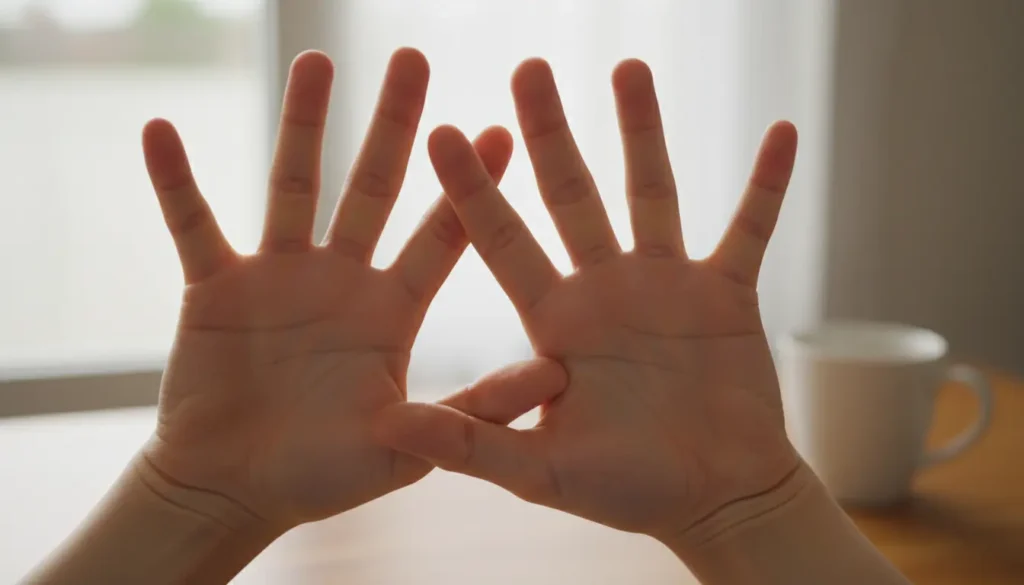
What Is a Trigger Finger Workout?
A trigger finger workout is a set of controlled movements and stretches aimed at improving tendon gliding and reducing pain or locking in the affected finger. The goal is to restore smooth motion of the flexor tendons through the pulley system of the finger.
Workouts are conservative, low-load, and can be done at home or under the guidance of a hand therapist. They focus on mobility, tendon glides, gentle strengthening, and reducing inflammation.
Who Should Try a Trigger Finger Workout?
People experiencing mild to moderate catching, clicking, or stiffness in a finger or thumb may benefit from a trigger finger workout. It is commonly used by office workers, musicians, gardeners, and people with diabetes or rheumatoid arthritis.
Do not start a program if you have a recent hand fracture, open wound, uncontrolled infection, or if symptoms include severe swelling or constant locked position. In those cases, see a clinician first.
Warm Up Before Your Trigger Finger Workout
Warming up increases blood flow and reduces stiffness. Spend 3–5 minutes on a gentle warm up before doing specific exercises.
- Warm water soak: 3–5 minutes in warm (not hot) water helps relax tissues.
- Hand shakes: Gently shake your hand for 30 seconds to stimulate circulation.
- Wrist circles: 10 slow circles each direction to loosen the wrist and forearm.
Core Exercises for a Trigger Finger Workout
Perform these exercises once or twice daily. Start slowly and stop any move that causes sharp pain. Aim for controlled movement rather than speed.
Tendon Glides for Trigger Finger Workout
Tendon glides help the flexor tendons move smoothly within the sheath. Do 5–10 repetitions of each position, holding each for 2 seconds.
- Position 1: Hand open, fingers straight.
- Position 2: Bend only the top joints (PIP and DIP) while keeping the base straight.
- Position 3: Make a full fist, then return to open hand.
Finger Extension Stretch
To gently stretch the pulley and tendon, place your affected finger on a flat surface tip-down and press the base down to extend the finger. Hold 10–15 seconds and repeat 3 times.
This helps reduce tightness of the tendon sheath and improve extension.
Isolated Finger Lifts
Place your hand flat on a table. Lift the affected finger slowly while keeping the other fingers down. Hold 2 seconds and lower slowly. Do 8–12 repetitions.
This exercise improves independent finger control and reduces compensatory movements from other digits.
Gentle Resistance Flexion
Use a soft rubber band around the tips of fingers to provide light resistance as you open the hand. Start with 8–10 reps and progress as comfortable.
Do not use heavy resistance. The aim is to strengthen without increasing tendon friction.
Technique Tips for a Safe Trigger Finger Workout
- Move slowly and with control to encourage tendon gliding.
- Avoid forceful gripping or repetitive heavy lifting during the exercise period.
- Use heat before exercise and ice after if there is noticeable swelling.
- Keep sessions short—5 to 15 minutes per session is sufficient.
Frequency and Progression for Your Trigger Finger Workout
Begin with daily practice for 2–3 weeks and track changes in pain and range of motion. If you see improvement, maintain the routine three to five times per week.
Progress by increasing repetitions first, then add light resistance only after pain has decreased. If symptoms worsen, reduce intensity and consult a professional.
When to Stop the Trigger Finger Workout and See a Specialist
Stop exercising and seek a hand specialist if you experience increasing pain, persistent locking in a bent position, numbness, or signs of infection like redness and warmth. A clinician can advise on steroid injection or minor procedures if conservative care fails.
Trigger finger is caused by thickening or irritation of the tendon sheath called the A1 pulley. Simple motion changes and targeted exercises can often ease symptoms without surgery.
Short Case Study: Office Worker Using a Trigger Finger Workout
Maria, a 48-year-old administrative assistant, noticed catching in her ring finger after long typing sessions. She started a trigger finger workout: daily tendon glides, isolated finger lifts, and short warm water soaks.
After four weeks she reported less catching and improved motion. She reduced heavy gripping at work and continued the exercise plan twice a week. Her symptoms stabilized and she avoided invasive treatments.
Simple Home Program Example
A recommended quick routine you can do at home:
- Warm water soak: 3 minutes
- Tendon glides: 2 sets of 10 reps
- Isolated finger lifts: 2 sets of 10 reps
- Gentle resistance opening with band: 1 set of 10 reps
- Ice wrap for 5–10 minutes if swelling follows
Final Notes on a Trigger Finger Workout
A consistent, gentle workout focused on tendon glides and controlled strengthening can reduce symptoms for many people with trigger finger. Use pain as your guide and prioritize smooth movement over force.
If you are unsure how to begin or your symptoms persist, seek evaluation by a hand therapist or physician for a tailored plan.