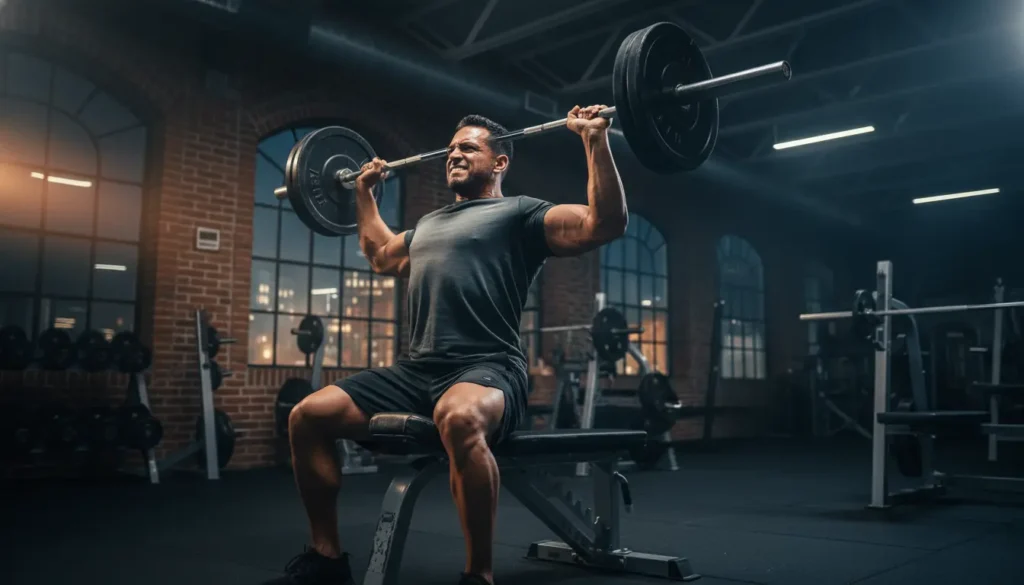
Most people notice lower and middle chest development first, but targeting the upper chest creates balanced shape and improved pressing strength. This guide gives clear, practical steps to prioritize the upper pectoral area with safe technique and simple programming.
Why the Upper Chest Matters
The upper chest (clavicular head of the pectoralis major) affects shoulder aesthetics and pressing mechanics. Weak upper chest muscles can lead to rounded shoulders and limit incline pressing power.
Training the upper chest improves posture, supports daily pushing tasks, and helps create a fuller chest appearance from the collarbone down.
How to Train the Upper Chest
Training the upper chest means using exercises that place the body on an incline and emphasize shoulder flexion with horizontal adduction. Vary load, angle, and range of motion for complete development.
Follow these basic principles:
- Use an incline (15–45 degrees) for main pressing movements.
- Prioritize compound lifts early in your session when you are strongest.
- Include higher-rep isolation work and slow eccentrics for muscle damage and time under tension.
- Keep a balanced program—train mid and lower chest too to avoid imbalances.
Key Upper Chest Exercises
Incline Bench Press for Upper Chest
Incline bench press is the foundation for upper chest strength. Adjust the bench to 15–30 degrees to maximize upper chest recruitment without overloading the shoulders.
Form cues: retract your shoulder blades, drive your feet into the floor, and lower the bar to the upper chest with controlled tempo.
- Sets/Reps: 3–5 sets of 5–8 reps for strength, or 3–4 sets of 8–12 for hypertrophy.
Incline Dumbbell Press for Upper Chest
Dumbbells allow a deeper stretch and independent control of each side. Use this to fix strength imbalances and improve range of motion.
Form cues: rotate slightly so thumbs point forward at the top, and avoid flaring elbows excessively.
- Sets/Reps: 3–4 sets of 8–12 reps; use a controlled 2–3 second descent.
Cable or Low-to-High Fly for Upper Chest
Cable flies performed low to high target the clavicular fibers effectively and maintain consistent tension through the motion.
Form cues: take a split stance, lead with the hands toward the midline and squeeze the upper chest at peak contraction.
- Sets/Reps: 3 sets of 12–15 reps to emphasize time under tension.
Push-Up Variations for Upper Chest
Incline push-ups with feet elevated or push-ups with hand placement slightly wider and higher can increase upper chest activation. These are useful for bodyweight progressions and conditioning.
- Sets/Reps: 3 sets to near-failure; adjust elevation to change difficulty.
Sample Upper Chest Workout Plan
Below is a practical session focused on the upper chest that can be done once or twice weekly as part of a split routine.
- Warm-up: 5–8 minutes light rowing or arm circles and 2 warm-up sets of incline press with light weight.
- Incline Barbell Press: 4 sets x 6–8 reps (rest 2–3 minutes).
- Incline Dumbbell Press: 3 sets x 8–12 reps (rest 90 seconds).
- Low-to-High Cable Fly: 3 sets x 12–15 reps (rest 60–75 seconds).
- Incline Push-Ups (feet elevated): 3 sets to near-failure (rest 45–60 seconds).
- Cool-down: gentle chest stretches and scapular mobility for 3–5 minutes.
Programming Tips for Upper Chest Growth
Progressive overload is the primary driver of muscle growth. Increase load, reps, or volume gradually every 2–4 weeks.
Include a mix of heavy (4–6 rep) and moderate (8–12 rep) ranges across the week. Recovery, sleep, and adequate protein are essential to convert training into growth.
Common Mistakes When Training the Upper Chest
- Using too steep an incline (above 45 degrees) which shifts work to the anterior deltoids.
- Flared elbows and poor shoulder positioning that increase injury risk.
- Neglecting mid- and lower-chest work—balance is important for function and appearance.
The upper chest, or clavicular head, responds well to slightly higher rep ranges because of its fiber composition. Mixing heavy and moderate reps helps both strength and shape.
Short Case Study: Real-World Example
Client: Mark, 28, intermediate lifter. Goal: fuller upper chest and stronger incline press. Starting max incline press: 185 lb for 5 reps.
Approach: Mark followed the sample workout twice weekly, increased protein to 1.6 g/kg, and tracked load progression. He added 2.5–5 lb to his incline press every other week when reps were on the higher end.
Result: After 10 weeks Mark increased incline 5RM to 205 lb and reported clearer upper chest development. He avoided shoulder pain by keeping the bench at 25 degrees and focusing on scapular retraction.
Quick Checklist Before an Upper Chest Session
- Bench angle set (15–30 degrees recommended).
- Proper warm-up and 2 light ramp-up sets.
- Plan sets, reps, and rest times ahead of time.
- Monitor shoulders; stop if sharp pain occurs.
Training the upper chest is straightforward when you choose the right angles and exercises and maintain progressive overload. Use the sample plan, focus on form, and adjust volume to match recovery and goals.
Start with conservative loads, prioritize compound incline presses, and add isolation work to finish sessions. Small, consistent improvements over weeks create meaningful upper chest development.